What a Dollhouse Scale Actually Means
A dollhouse scale is a ratio. 1:12 means every 12 centimetres of a real room becomes 1 centimetre in the miniature — or, in the imperial terms the hobby grew up with, one inch of dollhouse represents one foot of real life. The larger the second number, the smaller the miniature: a 1:24 chair is half the height of a 1:12 chair, and a 1:48 chair is half again.
Scale matters for one practical reason: furniture, accessories, dolls and houses from different scales do not mix. A 1:12 teacup on a 1:24 table looks like a bucket. Getting the scale right before you buy the second piece saves more money and frustration than any other decision in the hobby.
Dollhouse Scale Size Chart
Real-life measurements used here: a 180 cm adult, a 240 cm ceiling, a 204 cm door and a 45 cm chair seat.
| Scale | Also called | Adult figure | Ceiling height | Door height | Chair seat |
|---|---|---|---|---|---|
| 1:6 | Playscale | 30 cm | 40 cm | 34 cm | 7.5 cm |
| 1:12 | Standard / one-inch | 15 cm | 20 cm | 17 cm | 3.75 cm |
| 1:18 | — | 10 cm | 13.3 cm | 11.3 cm | 2.5 cm |
| 1:24 | Half scale | 7.5 cm | 10 cm | 8.5 cm | 1.9 cm |
| 1:48 | Quarter scale | 3.75 cm | 5 cm | 4.25 cm | 0.9 cm |
| 1:144 | Micro / dollhouse-for-a-dollhouse | 1.25 cm | 1.7 cm | 1.4 cm | 3 mm |
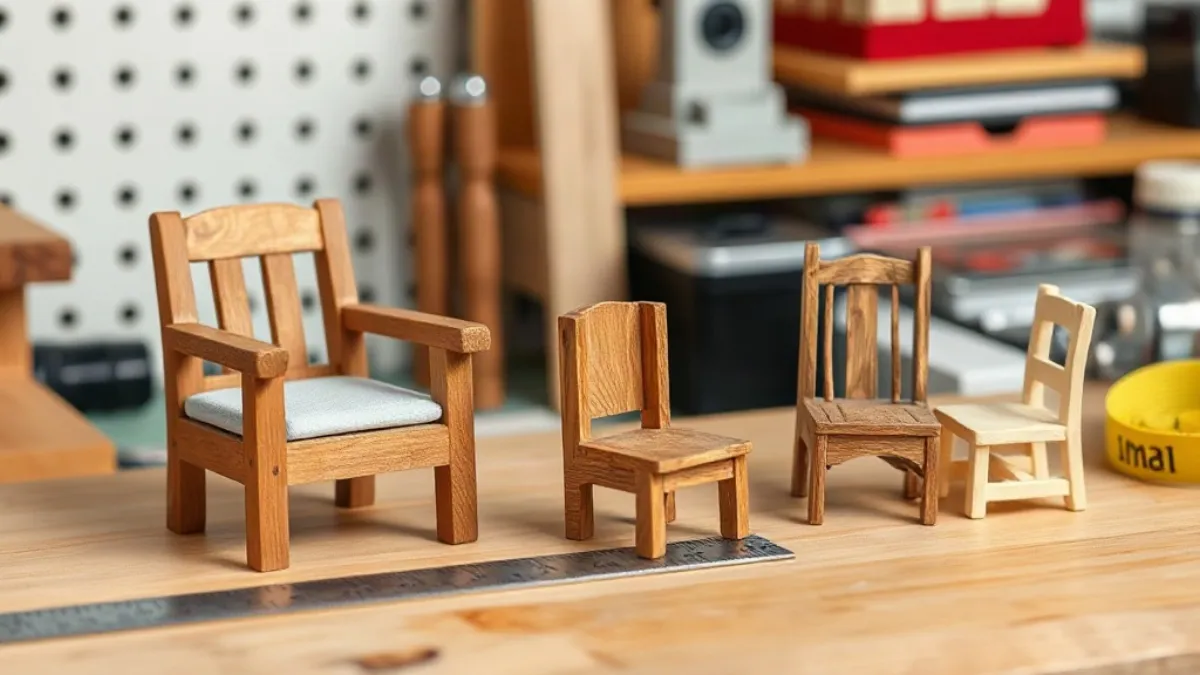
To convert any real object yourself, divide its real size by the scale number. A 200 cm bed at 1:12 is 200 ÷ 12 ≈ 16.7 cm long; at 1:24 it is about 8.3 cm. For a quick check at the workbench, print our free 1:12, 1:24 and 1:48 scale rulers, which read directly in real-life metres. To skip the arithmetic, use the dollhouse scale converter.
1:12 — The Standard Dollhouse Scale
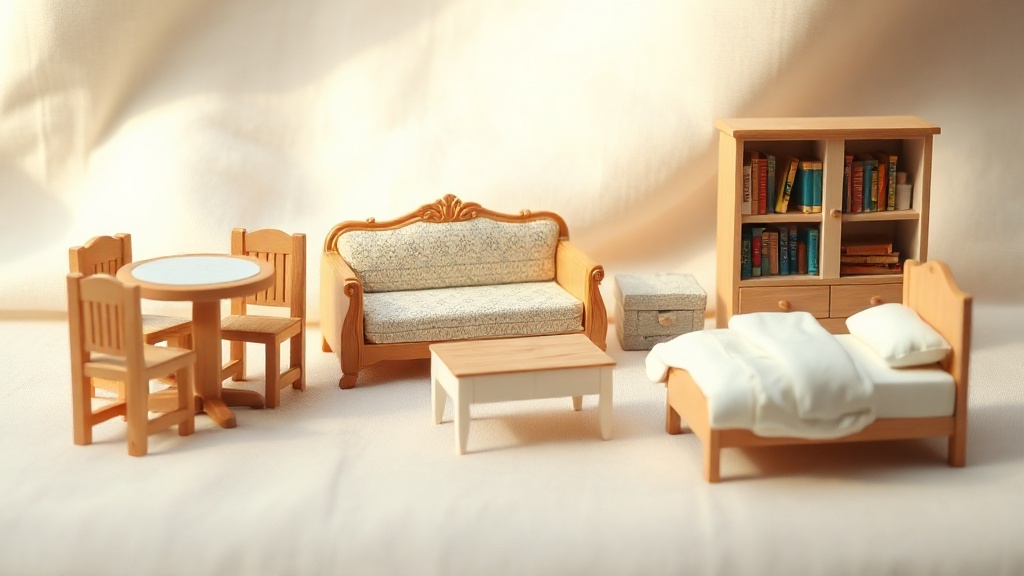
1:12 scale is the default for collectors and the scale most dollhouse furniture, lighting, wallpaper and food miniatures are made in. If you plan to keep adding pieces over years, it gives you by far the widest choice.
The trade-off is space. A three-storey 1:12 house is roughly the size of a small bookcase, and even a single 1:12 room box needs a shelf around 30 cm deep. Details are large enough to handle without magnification, which makes 1:12 comfortable for beginners.
Choose 1:12 if you want: the most furniture options, room to customise, and pieces you can easily pick up and rearrange.
1:24 — Half Scale
1:24 scale halves every dimension of 1:12, so a whole 1:24 house takes up roughly an eighth of the volume. Many compact DIY miniature house kits and room scenes sit at or near this scale, which is why they fit on a desk or shelf.
Accessories exist but the range is much smaller, and fine details (door handles, cutlery, plants) are fiddly to handle — good tweezers become essential rather than optional.
Choose 1:24 if you want: a complete house in limited space, or a finished display piece rather than an ever-growing collection.
1:6 and Other Doll Scales
1:6 playscale is sized for 30 cm fashion dolls such as Barbie, which is why ordinary dollhouse furniture looks tiny next to them. A house for these dolls is a large piece of furniture in its own right; check interior ceiling height (at least 35–40 cm) before buying.
Larger play dolls around 45 cm (18 inches) work at roughly 1:4, and are usually served by their own brands' furniture rather than dollhouse miniatures.
Children's wooden play dollhouses are often built around small dolls of 10–15 cm, which lands between 1:12 and 1:18. Manufacturers don't always state a scale for play houses, so measure the doll and the doorway rather than relying on the label.
Where Book Nooks and DIY Room Kits Fit
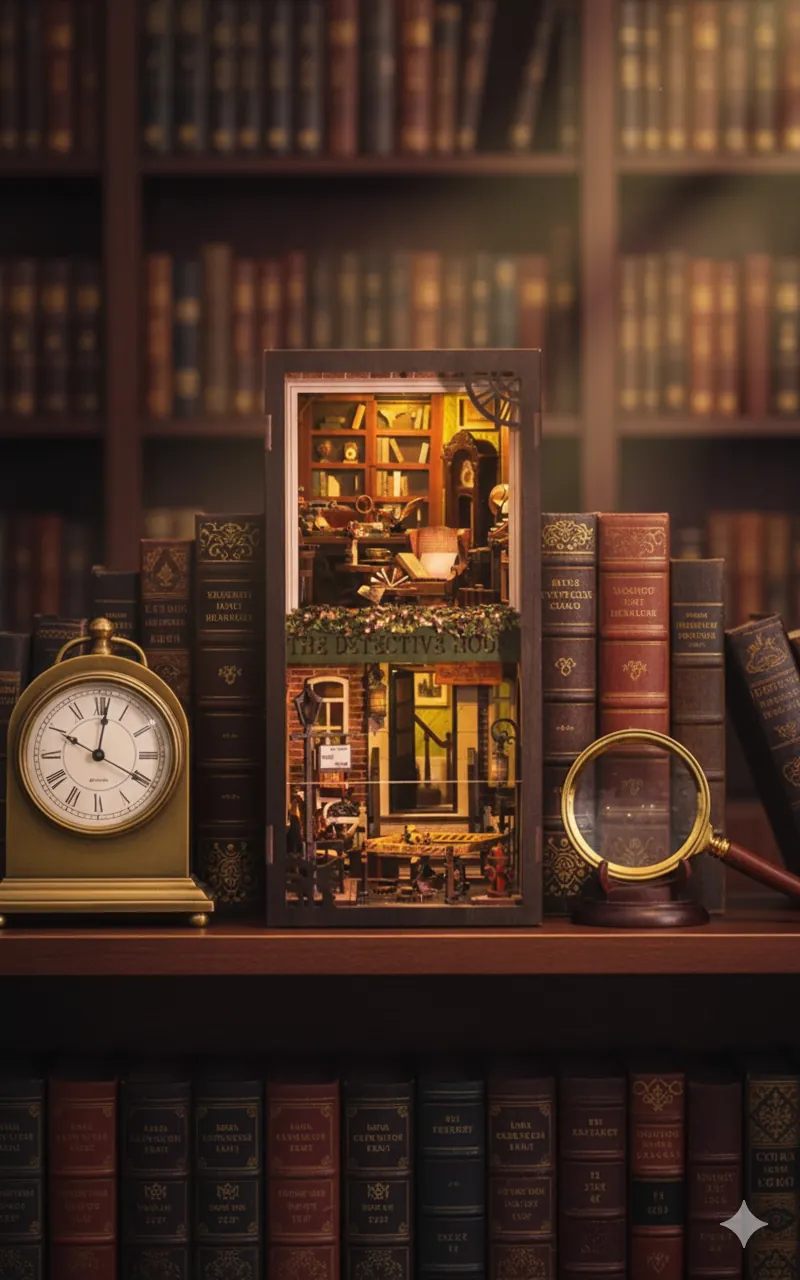
Book nook kits and boxed DIY miniature rooms are designed as complete scenes, and most listings don't state a formal scale. As a guide, the interior usually works out between 1:24 and 1:32 so a full street or shop fits inside a shelf insert.
What matters more for a book nook is its physical size: check the finished width, height and depth against your shelf. A typical insert is narrow (similar to a thick hardback) but can be deeper than a standard shelf, and the battery box sometimes adds a few centimetres at the back. Our guide to choosing a book nook kit covers the other checks, and the best book nook kits in Australia compares specific kits.
How to Check a Kit's Scale Before You Buy
Listings aren't always consistent, so verify rather than trust the headline:
- Look for the stated ratio in the title or specifications — "1:12", "1/12" and "1 inch scale" all mean the same thing.
- Find one dimension you can sense-check. An interior ceiling around 20 cm suggests 1:12; around 10 cm suggests 1:24.
- Compare a door. Real doors are about 2 m tall, so a door around 17 cm is 1:12 and around 8.5 cm is 1:24.
- Watch for "miniature" without a number. Accessory sets described only as "mini" are often 1:12, but not always — check the size of a single item.
- Keep one scale per room. If you do mix, keep the smaller-scale pieces at the back of a scene where forced perspective hides the difference.
Which Scale Should You Start With?
If you want a hobby you can keep adding to, start with 1:12: it's forgiving to build, easy to furnish and has the deepest range of accessories. If you want a single striking display piece that fits on a desk or bookshelf, a 1:24 kit or book nook gets you a finished scene faster and in less space.
Browse 1:12-friendly dollhouse furniture, compact miniature house kits or full dollhouse kits once you've picked your scale. For arranging pieces once they arrive, see how to arrange dollhouse furniture.
Scale for Toy Houses and Dolls
Toy lines use their own sizes: Sylvanian Families figures work out at roughly 1:16 (see which Sylvanian Families house to buy), while Barbie is 1:6 — the Barbie Dreamhouse guide and KidKraft dollhouses compared cover which dolls fit which house. For budget play houses, see Kmart vs BIG W vs Target. Free 1:12 printables, including openable miniature books, are drawn to scale.