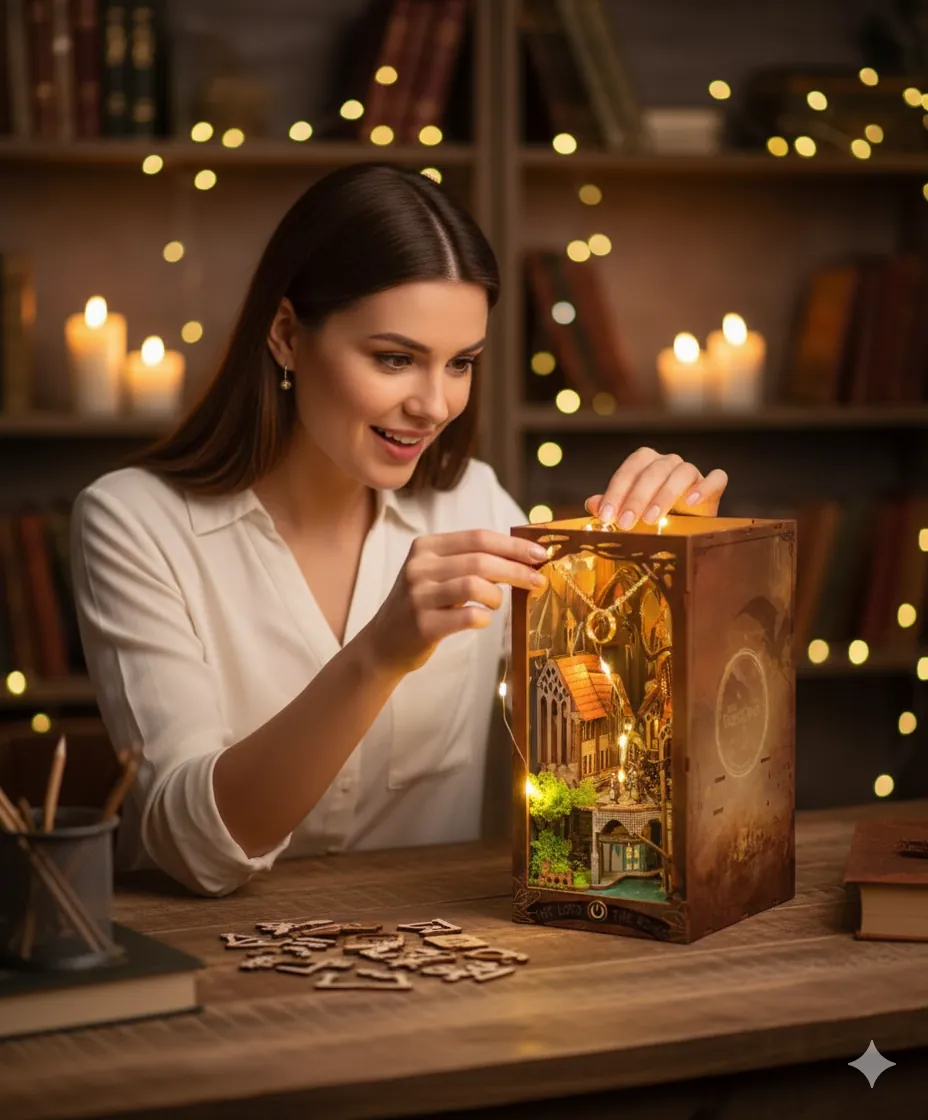
How Miniatures Can Transform Your Mental Health
In Australia's fast-paced world, finding moments of peace feels increasingly difficult. Enter miniatures – a hobby many people turn to for calm, focused time away from screens.
Why Miniature Work Feels Calming
Miniature crafting is widely described by hobbyists as calming, and the reasons people give are fairly consistent:
Absorbed attention — Delicate work demands enough concentration that there's little mental capacity left for rumination. This experience of becoming absorbed in a task is often described as a "flow state," a concept popularised by psychologist Mihaly Csikszentmihalyi.
Visible, incremental progress — Unlike much of modern work, a miniature build shows exactly what you accomplished in an hour. That tangible progress is a large part of why sessions feel satisfying rather than draining.
A defined endpoint — The project finishes. There is a completed object at the end, which is a rarer feeling than it should be.
A note on the evidence: crafting and creative activity are frequently discussed in the context of wellbeing, and many people find them genuinely restorative. That said, this is a hobby article rather than health advice — miniature crafting isn't a treatment for anxiety, depression, or any other condition. If you're struggling with your mental health, please speak with your GP or a qualified professional. In Australia, Beyond Blue and Lifeline both offer free, confidential support.
Why Miniatures Excel for Stress Relief
Compared to other hobbies, miniature crafting offers unique benefits:
- Requires full attention (no room for anxious thoughts)
- Progress is visible and measurable
- Creates beautiful finished pieces
- Can be done in small time increments
- Works in small spaces
Getting Started for Stress Relief
Choose your first kit wisely for maximum relaxation:
- Start with beginner-rated projects
- Select themes that bring you joy
- Give yourself plenty of time
- Create a dedicated, comfortable workspace
Building a Mindful Practice
Tips for mindful miniature crafting:
- Put away your phone
- Work in natural lighting when possible
- Take breaks when frustrated
- Focus on process, not just outcome
- Celebrate small victories
Choosing a Kit That Relaxes Rather Than Frustrates
Not every kit is restful to build, and picking the wrong one can produce the opposite of what you're after. If calm is the goal rather than challenge, look for:
Slot-together or click-fit construction over glue-heavy builds. Reversible mistakes remove the low-level anxiety of getting something permanently wrong.
Larger components. Kits where the smallest piece is a few millimetres across demand precision that can become tense rather than soothing, particularly at the end of a long day.
A clear instruction booklet with illustrations. Ambiguous instructions are the most common source of frustration in this hobby, and no amount of enthusiasm compensates for them.
A build time you can finish. A project that stretches on indefinitely starts to feel like an obligation. Something completable across a few evenings keeps the experience positive.
Conversely, if you actively enjoy a challenge, the harder kits with working mechanisms deliver a different but equally real satisfaction. The point is to choose deliberately rather than discovering the mismatch three hours in.
Making Time for It Realistically
The most common way this hobby fails is not difficulty — it's that people wait for a free afternoon that never arrives. Two habits help:
Leave the work set up. If starting requires unpacking a box and clearing a table, sessions won't happen. A dedicated corner, even a small one, removes most of the friction.
Work in short sessions. Twenty or thirty minutes is genuinely enough to make visible progress on most kits. Treating it as something that needs a whole afternoon is what turns it into a project you never start.
Australian Community Support
Connect with fellow miniature enthusiasts through online groups and local clubs. Sharing your creations and challenges adds social connection to your stress-relief practice.
There are active Australian miniature and dollhouse groups on social platforms, and several state-based miniature societies run regular meets and annual fairs. For anyone who has been building alone, seeing others' work in person is both genuinely useful for technique and a good reminder of how varied this hobby is.
Begin your stress-relief crafting journey with our carefully selected beginner kits designed for peaceful building!