



A wooden dollhouse is one of the few Christmas presents still played with years later. For a child aged roughly 3 to 8, choose a sturdy wooden play house listed for ages 3+, then add a doll family and at least one room of furniture so it's ready to play with on Christmas morning. For an adult or older teen who likes making things, a wooden dollhouse kit to build and paint is a different gift altogether.
We've picked from houses in our catalogue using what each listing states: age rating, contents and size. We haven't played with every one, so where a listing is silent we say so rather than guess. Searches for wooden dollhouses climb every November in Australia, and the questions behind them are always the same: which one, how big, what else to buy, and how to have it ready on the day.
Choose by age
Under 3. None of the houses here is listed for under-3s. Small furniture, tiny accessories and doll shoes are choking hazards at that age. If you'd like a house waiting for them, buy one rated 3+, keep it for their third birthday or Christmas, or put every small piece away and supervise play. See the safety section below.
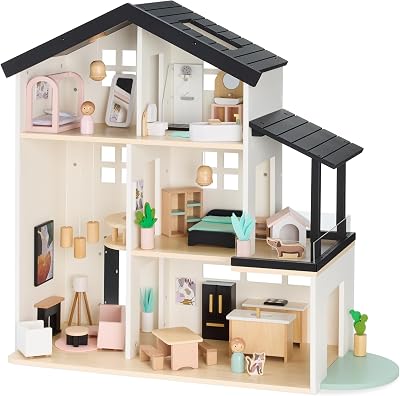
Ages 3 to 5. Look for chunky, sturdy construction, a house that's open at the back or front so small hands can reach in, and furniture that's hard to lose. The ROBUD Wooden Dollhouse is listed for ages 3–6 and comes with its furniture. The Le Toy Van Rose Heart is a classic three-storey house for 3+.
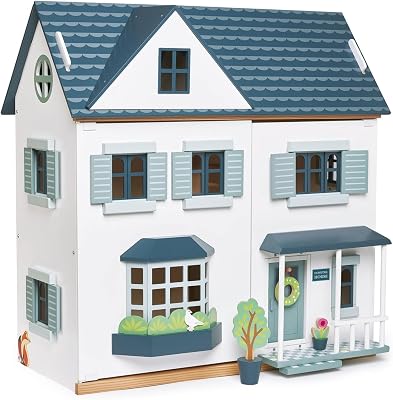
Ages 5 to 8. Children this age play longer stories, so more rooms, stairs and moving parts are worth having. The KidKraft Majestic Mansion has a working lift and a garage, and the Tender Leaf Dovetail gives them six rooms to fill over time.
Tweens, teens and adults. Play houses lose their appeal around 9 or 10, but making a dollhouse doesn't. A traditional kit such as the Greenleaf Harrison is built from unfinished wood and then painted, wallpapered and furnished, which suits a patient builder over the summer holidays. Our wooden dolls house guide compares more kits.
Choose by size and space
Measure before you buy. A big house needs its own patch of floor plus room for a child to sit beside it, and three-storey houses are tall: the Tender Leaf Dovetail stands about 69.5 cm. Think about where it will live after Christmas, not just where it'll be unwrapped.
- Bedroom corner or playroom: a full-size three-storey house is the centrepiece, but plan for the space.
- Shared room or small home: a two-storey house, or one that sits on a low shelf.
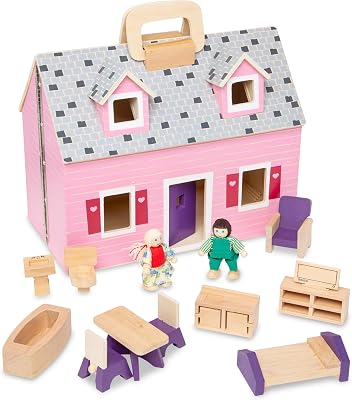
- Holidays and grandparents' houses: Christmas here falls in the summer holidays, when many families travel. The Melissa & Doug Fold & Go folds shut with a carry handle and measures about 34 × 27 × 18 cm closed, so it can come along.
Wooden or plastic?
Wood is heavier, more stable and usually lasts long enough to hand down to a younger sibling. It also takes paint, so an older child can redecorate it. Plastic and character houses tend to be lighter, cheaper to start with and tied to a favourite show, and some have sounds or lights. If the child is a fan of a show, a character house may get more play; if you want one house to last through several children, wood is the safer bet. Our kids dolls house guide covers both.
Furniture, dolls and add-ons
Check exactly what's in the box. Some houses include furniture and dolls, and others, such as the Dovetail, are sold empty. A house with nothing in it on Christmas morning is a let-down, so plan at least:
- A doll family that fits the rooms standing up
- One or two rooms of furniture, usually a kitchen and a bedroom to start
- A small extra for the stocking, such as a pet, a tiny food set or a bathroom


Children's dollhouses don't follow one scale, so measure a room's height and the doorways before buying furniture or dolls. The ROBUD furniture set and the Sumind 35-piece set with eight figures are made for children's play. Collectors' furniture is usually 1:12 or 1:24 and can be fragile; our dollhouse scale guide explains the difference. Extra rooms and dolls are easy presents for the next birthday, so the house can grow year by year.
Build it before Christmas morning
Many wooden dollhouses arrive flat-packed. Assembling one with excited children waiting is nobody's idea of Christmas morning, so:
- Open the box when it arrives. Check every panel and bag of screws against the parts list while there's still time to sort out a missing piece.
- Build it a few nights before. Allow an evening; larger houses can take a couple of hours. You'll usually need a screwdriver, and sometimes a hammer for small nails.
- Set up one room. Arrange the furniture and put the family in, so it looks lived-in when it's revealed.
- Hide it under a sheet. A big house is hard to wrap, and a sheet with a bow makes a good reveal.
- Keep the box and instructions until you're sure everything is in working order.
Leave time for delivery as well. Large items can take longer to arrive, so check the delivery estimate shown at checkout. Our Christmas miniature kit gift guide lists Australia Post's 2026 send-by dates if you're posting a gift interstate.
Safety
- Small parts and under-3s. Australia has a mandatory safety standard for toys for children up to 36 months, so the age label on the box matters. Furniture, accessories and doll shoes from a 3+ house can be choking hazards for a baby or toddler sibling. Store small pieces in a lidded box out of their reach.
- Stability. A tall house should sit on a flat floor or low, sturdy table, ideally against a wall, so it won't tip when a child leans on an upper floor.
- Batteries. If a house or accessory has lights or sound, check the battery compartment is screwed shut and keep spare button batteries well away from young children. Product Safety Australia has more advice on toys and batteries.
- Finished edges. After assembly, run a hand over corners and the stairs to check for splinters or sharp screw tips.
More gift ideas
For dollhouses of every type, browse all dollhouses or dolls houses for kids. For book nooks and miniature kits for the grown-ups, see our Christmas book nook and miniature kit gift guide and gifts for crafters.
Frequently asked questions
What age is a wooden dollhouse a good Christmas gift for?
Most children's wooden play houses are listed for ages 3 and up, and that's when small-world play usually takes off. They tend to stay in use until about 8 or 9. Unfinished kits such as Greenleaf houses are hobby projects for adults and older teens.
Is a dollhouse safe for a child under 3?
Only if the toy's own age label covers the child. Every house in this guide is listed for 3+, and most come with small furniture, accessories or dolls. For a toddler, choose a toy labelled for their age, or put the small pieces away until they're older.
Do wooden dollhouses come assembled?
Many arrive flat-packed and need an adult with a screwdriver, sometimes for an hour or two. Open the box when it arrives, check every part is there, and build it before Christmas Eve rather than on the morning.
Will any dollhouse furniture fit a wooden dollhouse?
Not always. Children's houses don't share one scale, while collectors' furniture is usually 1:12 or 1:24. Measure a room's height and the doorways, and check that the dolls will fit standing up.
Should I buy furniture and dolls at the same time?
If the house doesn't include them, yes, at least one room and a doll family, so there's something to play with on the day. Extra rooms make easy birthday presents later.
How do I hide a big dollhouse until Christmas?
Keep it flat-packed in its box until the last few days, then build it in a room the children don't use. A sheet over the top works as wrapping for a house too big to wrap.